Searching for the best radon fan to safeguard your living space? Cut through the clutter with our fact-based reviews highlighting energy efficiency, noise reduction, installation ease, and durability to help you make an informed decision about the top radon fans available, like RadonAway RP145 and Festa AMG Hawk EC.
Quick Overview of Top Radon Fans
When securing your home from radon gas, you’ll find several top-notch radon fans in the market. These include:
Each of these many radon fans has unique features and performance levels, designed to meet a variety of radon mitigation needs, including the use of radon mitigation fans.
The best radon fans for different needs are:
- RadonAway RP145: best for energy efficiency, with high air flow and low energy consumption
- Fantech HP 2190: offers power, although it may be slightly noisier
- Festa AMG Hawk EC: the manufacturer states an electronically commutated motor, up to 65 W, a 6-inch duct and a 7-year warranty
The AMG Legend offers superior performance, with a sturdy build and exceptional customer support from Festa Radon Technologies. Lastly, Festa AMG Radon Fans are appreciated for their quiet operation, minimal vibration, and effective radon mitigation at a reasonable cost.
Radon fan comparison
Fan selection depends on system design; a qualified radon mitigation professional sizes the fan. See the radon fan sizing guide. The table lists manufacturer-stated features only. Images link to the Amazon listing. Product listings and images come from Amazon; check the listing for current price and availability.
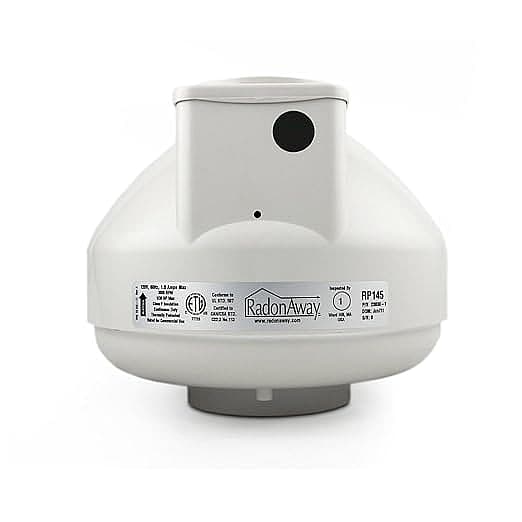
In-Depth Review: RadonAway RP145 Radon Mitigation Fan
Check price on Amazon
Specifications:
- High air flow
- Energy efficient
- Eternalast polycarbonate plastic housing
- Water-hardened motorized impeller
The Festa AMG Hawk EC is listed with these manufacturer-stated details:
- Electronically commutated motor
- Up to 65 W
- 6-inch duct
- 7-year warranty as stated by the manufacturer
Check price on Amazon

Best for: Energy-efficient EC motorFesta AMG Hawk EC radon fan
Manufacturer-stated
- Electronically commutated motor, up to 65 W
- 6-inch duct
- 7-year warranty as stated by the manufacturer
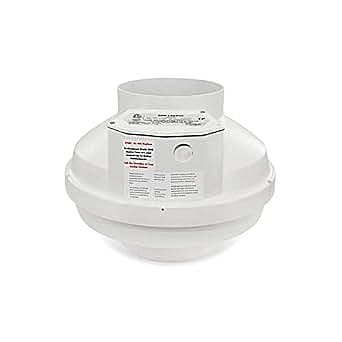
Check price on Amazon Comprehensive Breakdown: AMG Legend Radon Mitigation Fan
Check price on Amazon
Pros:
- Superior performance
- Sturdy build
- Exceptional customer service
Cons:
The AMG Legend Radon Exhaust Fan delivers considerable value in the sector. From my vantage point, it surpasses rival models in both construction and performance, positioning it as a compelling solution for radon mitigation. I’ve found it to be a sturdy and reliable choice, appreciated by homeowners for its performance.
Additionally, Festa Radon Technologies, the creator of the AMG Legend, provides exceptional customer service and support. This, coupled with the fan’s made-in-the-USA manufacturing, adds to the overall customer satisfaction with the product. Given its superior performance and exemplary customer service, I’d rate the AMG Legend highly on performance, durability, and customer service.
Check price on Amazon

Best for: 6-inch duct, 345 CFM classFesta AMG Legend radon fan
Manufacturer-stated
- Listed at 345 CFM and up to 150 W
- 6-inch duct
- 5-year warranty as stated by the manufacturer
Check price on Amazon Understanding Radon Fans: Important Elements and Features
To fully understand radon fans, it’s critical to consider a few essential elements and features. One of the most crucial is the suction power. A high suction radon fan must move varying air volumes with larger intakes. Specific fans are tailored to different soil permeability and under-slab conditions, while others, such as moderate suction fans, are designed for low airflow moderate suction applications.
Another vital aspect is noise levels. Industry standards guide permissible noise levels, with sone ratings helping to ensure comfort. Additionally, radon fans differ in their energy use. Models with an electronically commutated motor, such as the Festa AMG Hawk EC (up to 65 W as stated by the manufacturer), are one option when energy use matters.
Finally, regular maintenance is critical for a radon fan’s durability. While fans may last five years or longer, they require routine check-ups to ensure they remain airtight, silent, and effective.
How to Choose Your Ideal Radon Fan
The process of selecting your perfect radon fan encompasses several factors that need to be taken into account. A fan curve chart can help radon professionals select the most suitable radon fan based on parameters like air volume flow rate, static pressure, and brake horsepower.
Budget is another crucial factor to consider. The overall costs for radon mitigation typically range from $1,500 to $3,000, which should be factored into the selection of a radon fan. Ultimately, choosing the right radon fan involves a balance of:
- Performance
- Noise control
- Energy efficiency
- Cost
The Importance of Regular Testing and Maintenance
It is vital to conduct testing for radon levels in your home. This can be done through short-term or long-term tests, with the fall or winter months being the most appropriate due to reduced ventilation. After the installation of a radon mitigation system, professional testing is vital to confirm that radon levels are reduced to a safe threshold.
Regular maintenance of radon fans is equally important. Devices like U-tube manometers and notification monitors ensure that radon fans are functioning correctly. Factors such as a home’s construction, insulation, seasonal changes, and heating systems can influence radon levels and necessitate the correct functioning of radon mitigation systems.
Understanding the Dangers of Radon Gas
Radon gas, a dangerous pollutant, has a proven link to lung cancer. In fact, it is the leading cause of lung cancer among non-smokers in the United States. According to the EPA, radon is responsible for about 21,000 lung cancer deaths every year in the United States.
For smokers, the risk of lung cancer increases significantly when combined with radon exposure. The World Health Organization indicates that radon is a cause of up to 15% of lung cancer cases globally. Understanding these dangers underscores the importance of effective radon mitigation and the pivotal role that radon fans play.
The Role of Professional Installation and Consultation
Effective radon mitigation is greatly influenced by professional installation and consultation. Experienced mitigation professionals are adept at installing radon fan systems in various types of buildings, addressing unique structural challenges effectively.
A professionally installed active radon fan system can assure potential buyers that radon levels are safely below EPA action levels. Furthermore, professional installation contributes to a drier home environment, reducing the risk of mold, mildew, and bacterial growth.
The EPA mandates the inclusion of a passive radon system monitor or warning device in every radon mitigation system, which is typically installed by professionals to ensure compliance and ongoing operational monitoring.
Choosing the Right Radon Fan
In conclusion, radon fans are an essential component of radon mitigation systems, helping to draw radon gas from the soil and vent it safely outdoors. Choosing the right fan involves considering factors like air volume flow rate, static pressure, brake horsepower, and budget. Regular maintenance and testing, as well as professional installation, ensure the fan’s effectiveness and longevity. Understanding the dangers of radon gas underscores the importance of these measures. Remember, the right radon fan can contribute significantly to your home’s indoor air quality and, ultimately, your health.
Frequently Asked Questions
What is the role of a radon fan in a radon mitigation system?
The role of a radon fan in a radon mitigation system is to draw radon gas from the soil and vent it safely outdoors, preventing indoor accumulation and protecting against serious health risks.
How do I choose the right radon fan?
To choose the right radon fan, consider factors such as air volume flow rate, static pressure, brake horsepower, energy efficiency, noise levels, and your budget. These parameters will help you make an informed decision.
Why is regular testing and maintenance of radon fans important?
Regular testing and maintenance of radon fans are important to ensure safe radon levels in your home and to keep the radon fan airtight, silent, and effective.
What are the dangers of radon gas?
The dangers of radon gas include its link to lung cancer, as it is the leading cause of lung cancer among non-smokers in the United States. Take necessary precautions to reduce exposure.
Why should I opt for professional installation and consultation?
Opting for professional installation and consultation ensures that unique structural challenges are effectively addressed, compliance with EPA mandates is met, and ongoing operational monitoring is provided.